

Last updated: August 4, 2026
Quick Answer: Disposable vapes leak when e-liquid escapes past internal seals due to pressure changes, temperature swings, manufacturing defects, or physical damage. The most effective designs prevent this with silicone-sealed reservoirs, top-mounted coils, and anti-leak airflow valves. A small amount of condensation near the mouthpiece is normal, but steady dripping or pooling liquid signals a real problem.
Key Takeaways
- Temperature is the top environmental cause of leaking. Heat above 35 degrees Celsius thins e-liquid and expands air inside the reservoir, pushing juice past seals.
- Cheap manufacturing is the top product cause. Poorly fitted O-rings, thin silicone gaskets, and inconsistent fill volumes account for most leak-related returns in wholesale data.
- Not all leaking means the device is broken. Light condensation around the mouthpiece is normal; steady dripping from the base or airflow holes is not.
- Storing vapes upright and at room temperature prevents most leaks before they start.
- Top-coil designs leak less than bottom-coil designs because gravity works with the seal instead of against it.
- You can sometimes stop a minor leak by clearing the mouthpiece, wiping the contacts, and storing the device upright, but a cracked housing or failed seal can’t be fixed.
- Reputable brands use multi-point sealing, mesh coils, and pressure-equalization vents to keep liquid where it belongs.
- Checking packaging integrity, batch codes, and excise stamps before buying helps you avoid defective units.
Why Do Disposable Vapes Leak?
Disposable vapes leak when e-liquid finds a path out of the sealed reservoir, usually through the mouthpiece, airflow slots, or the base of the device. This happens because of one or more of five root causes: temperature changes, pressure differentials, physical damage, manufacturing defects, or improper storage.
Here’s a breakdown of the most common triggers:
- Thermal expansion. When the device gets warm, air inside the reservoir expands and pushes liquid through wicking material and past seals.
- Altitude and pressure shifts. Carrying a vape on a plane or driving through mountain roads lowers external air pressure, which forces liquid outward.
- Overfilling at the factory. If the e-liquid volume exceeds the reservoir’s designed capacity by even a small margin, there’s no room for air expansion.
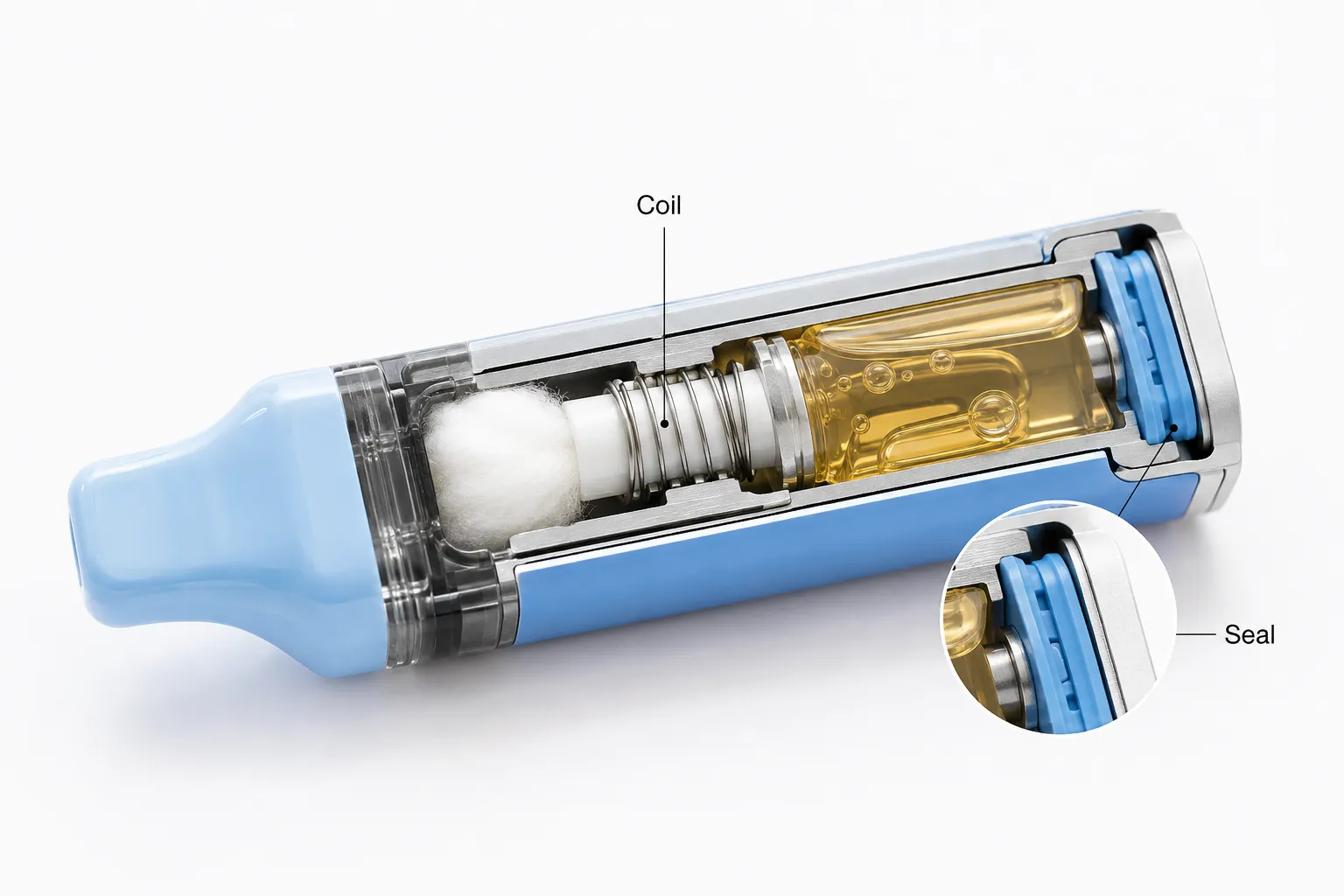
- Worn or missing O-rings. Low-cost devices sometimes ship with improperly seated silicone seals.
- Micro-cracks in the housing. Drops, pocket pressure, or sitting on the device can create tiny fractures that slowly weep liquid.
Understanding why disposable vapes sometimes leak and what design prevents it starts with recognizing that most leaks aren’t random. They follow predictable physics. If you’re new to vaping, our plain-English guide to disposable vapes covers the basics of how these devices are built.
What Causes Vape Juice to Leak Out?
E-liquid leaks out when the internal pressure exceeds the seal’s ability to contain it, or when a physical barrier (O-ring, gasket, housing wall) fails. The liquid itself is a mix of propylene glycol (PG), vegetable glycerin (VG), nicotine, and flavoring. PG is thin and flows easily; VG is thicker. Devices with a higher PG ratio are more prone to seeping because the liquid moves through small gaps faster.
Common mechanical causes:
| Cause | What Happens | How Common |
|---|---|---|
| Failed O-ring seal | Liquid seeps past the coil housing into the airflow channel | Very common in budget devices |
| Overfilled reservoir | No headspace for air expansion; liquid is forced out under heat | Moderate; batch-dependent |
| Cracked polycarbonate shell | Slow weeping through hairline fractures | Common after drops or pocket pressure |
| Wicking oversaturation | Cotton absorbs more liquid than the coil can vaporize, flooding the chamber | Common with chain vaping |
| Condensation buildup | Vapor cools and re-liquefies inside the mouthpiece tube | Very common; usually harmless |
A quick way to tell the difference: condensation feels like a light mist on the lips and clears with a tissue. A true leak leaves visible pooling or sticky residue on the outside of the device.
Does Temperature Affect Disposable Vape Leaking?
Yes, and it’s now recognized as the single biggest environmental factor. Heat above roughly 35 degrees Celsius (95 degrees Fahrenheit) does two things simultaneously: it thins the e-liquid (lowering viscosity so it flows more freely) and it expands the trapped air inside the reservoir. Both effects push liquid past seals that hold fine at room temperature.
Situations that cause temperature-related leaks:
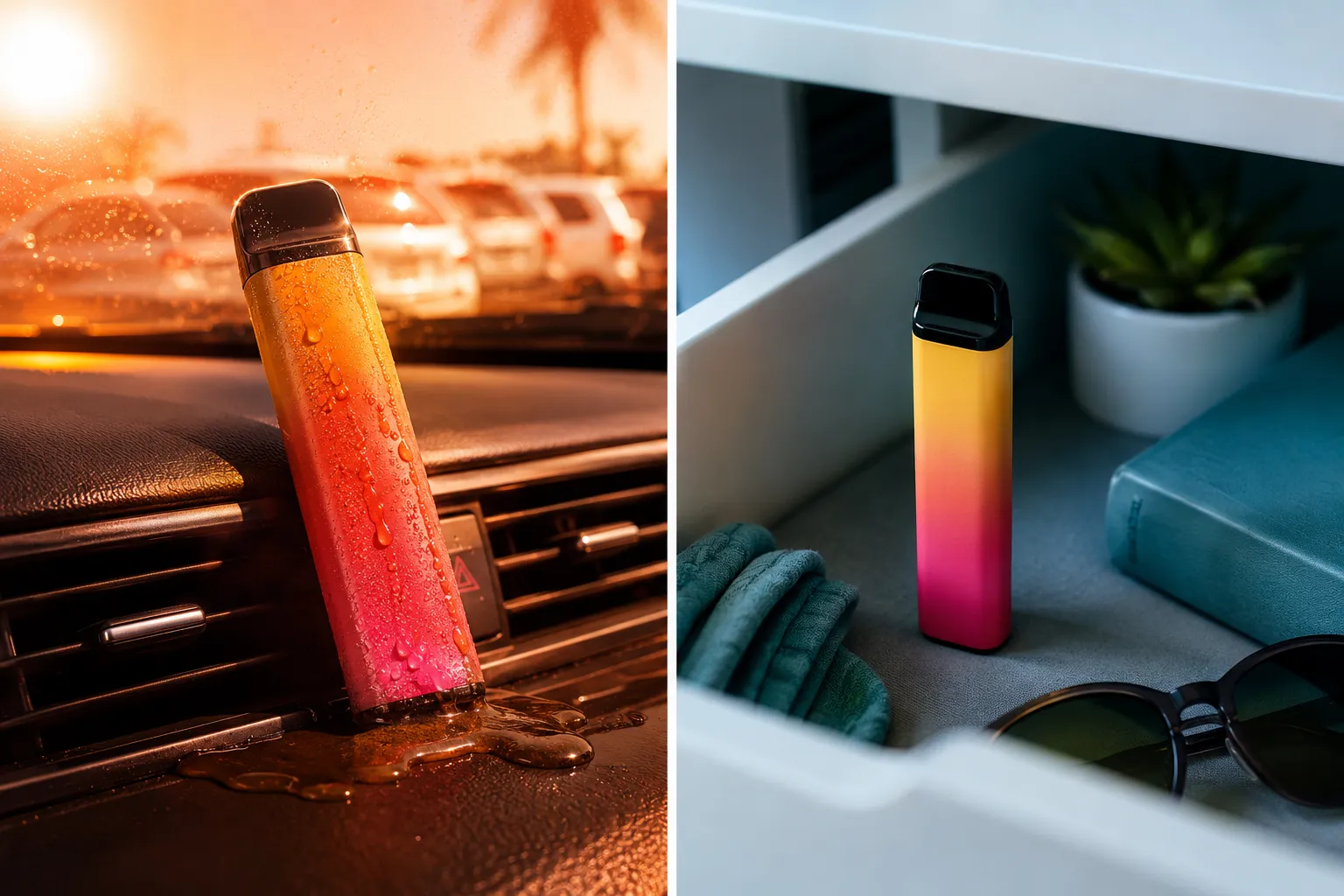
- Leaving a vape in a parked car during summer (interior temperatures can exceed 60 degrees Celsius)
- Carrying a device in a front pants pocket against body heat for hours
- Storing devices near windows, radiators, or heating vents
- Shipping without climate-controlled packaging
Cold temperatures matter too, but in the opposite way. Below about 10 degrees Celsius, VG-heavy e-liquid thickens and doesn’t wick properly, which can cause dry hits rather than leaks. However, moving a cold device into a warm room creates rapid condensation inside the mouthpiece, which users often mistake for a leak.
Decision rule: If a device only leaks after being in heat and stops once it cools down, the seals are probably intact. Store it upright at room temperature (15 to 25 degrees Celsius) and the problem usually resolves. If it keeps leaking at room temperature, the seal is likely compromised. For more on battery safety and proper storage, see our dedicated guide.
How Do Vape Manufacturers Prevent Leaks?
Reputable manufacturers use a combination of structural design choices, material selection, and quality-control testing to minimize leaking. The most effective anti-leak systems address all five root causes simultaneously.
Key design features that stop leaking:
- Top-coil configuration. Placing the coil and wicking assembly above the reservoir means gravity pulls liquid away from the airflow channel rather than toward it. This single change eliminates the most common leak path in bottom-coil designs.
- Dual silicone O-ring seals. Two O-rings at the coil-to-reservoir junction provide redundancy. If one shifts slightly, the second maintains the seal.
- Pressure-equalization vents. Small one-way valves or micro-channels allow air pressure to equalize without letting liquid escape. This is critical for altitude changes.
- Mesh coil wicking. Mesh coils distribute heat evenly across a wider surface, which means the cotton wicks at a consistent rate. This prevents the flooding that happens when a traditional round-wire coil leaves cold spots in the wick.
- Controlled fill volumes. Leaving 10 to 15 percent headspace in the reservoir gives air room to expand under heat without forcing liquid out.
- Ultrasonic welding of the housing. Instead of snap-fit or glued seams, ultrasonic welding creates a molecular bond between plastic components, eliminating micro-gaps.
Quality-control steps at better factories include:
- Vacuum-leak testing on a sample from each production batch
- Thermal cycling tests (exposing devices to repeated hot-cold cycles)
- Drop testing from standard heights
- Automated fill-volume verification with optical sensors
To learn more about how disposable vapes work internally, including coil and wicking mechanics, check out our detailed explainer.
Which Vape Design Features Stop Leaking?
The features that matter most are top-coil placement, sealed airflow paths, and high-quality gasket materials. These three elements, working together, account for the biggest reduction in leak rates.
Feature-by-feature breakdown:
- Top-coil vs. bottom-coil: Bottom-coil devices rely entirely on seal integrity to fight gravity. Top-coil devices use gravity as a natural barrier. Choose top-coil if leak prevention is a priority.
- Closed airflow systems: Some devices route air through a sealed channel that never contacts the reservoir directly. This prevents liquid from migrating into the airflow path even if the wick is oversaturated.
- Anti-leak mouthpiece inserts: A small mesh or sponge insert inside the mouthpiece catches condensation before it reaches the user’s lips. It doesn’t prevent reservoir leaks, but it eliminates the most noticeable symptom.
- Tapered reservoir design: Some manufacturers shape the reservoir so that liquid naturally pools away from seal points, reducing hydrostatic pressure on gaskets.
Common mistake: Assuming that a metal housing means better leak protection. Housing material (metal vs. plastic) has almost no effect on leak rates. What matters is the internal seal architecture and the precision of component assembly.
What’s the Difference Between Quality Vapes and Cheap Ones That Leak?
The difference comes down to three things: seal materials, assembly precision, and quality-control testing. A well-made disposable vape and a cheap one may look identical on the outside, but the internal engineering is where they diverge.
Quality indicators:
- Seal material: Premium devices use medical-grade or food-grade silicone O-rings. Budget devices often use generic rubber that hardens and shrinks over time, especially in heat.
- Assembly tolerance: Better factories maintain tighter tolerances (the acceptable range of variation in component dimensions). A coil housing that’s off by even 0.2 mm can create a leak path.
- Fill consistency: Automated filling systems with optical verification produce consistent volumes. Manual or semi-automated filling leads to batch-to-batch variation.
- Post-assembly testing: Quality brands test a statistically significant sample from each batch. The cheapest brands skip this step entirely.
Price is a rough but imperfect signal. A device priced well below market average for its puff count likely cut costs somewhere. That said, the most expensive device isn’t automatically the best sealed. Look for brands that publish their design specs and stand behind warranty claims. Our honest buyer’s guide to the best disposable vapes in Canada compares specific models on build quality and reliability.
Best Disposable Vape Brands That Don’t Leak
No brand can guarantee zero leaks across every unit, but some have significantly lower leak rates due to better engineering and stricter quality control. Brands that consistently perform well in wholesale return-rate data share a few traits: they use top-coil or mid-coil designs, dual O-ring seals, and controlled fill volumes.
What to look for in a reliable brand:
- Published device specifications (coil type, e-liquid volume, battery capacity)
- Consistent packaging with batch codes and expiry dates
- Federal excise stamps on products sold in Canada (indicating regulatory compliance)
- Low return rates reported by retailers
- Positive user feedback specifically mentioning no leaking
Rather than naming a definitive “best” list that changes quarterly, focus on the design and QC traits above. Brands that invest in these areas produce fewer leaking units. For a current comparison of top-performing devices, see our best disposable vapes in Canada for 2026.
How to Stop a Disposable Vape From Leaking
If a disposable vape has started leaking, the fix depends on the cause. Minor condensation issues are easy to manage. A failed internal seal usually can’t be repaired.
Step-by-step troubleshooting:
- Wipe the exterior with a dry tissue or paper towel. Remove any visible liquid from the mouthpiece, airflow holes, and base.
- Clear the mouthpiece. Gently blow through the mouthpiece (away from your face) to push accumulated condensation out of the airflow channel. Then wipe again.
- Store the device upright with the mouthpiece pointing up. This uses gravity to pull liquid back toward the reservoir and away from the airflow path.
- Move it to a cool, stable-temperature location. Avoid pockets, car dashboards, and windowsills.
- Reduce puff frequency. Chain vaping floods the wick faster than it can recover, leading to gurgling and spitting. Wait 15 to 30 seconds between puffs.
- Check for cracks. Run a finger along the seams of the housing. If you feel a ridge, gap, or see a hairline crack, the device is compromised and should be disposed of properly.
Can you fix a leaking disposable vape permanently? In most cases, no. Disposable vapes are sealed units not designed for user repair. If the leak is caused by a failed O-ring or cracked housing, there’s no practical way to access and replace the component. The steps above manage symptoms but don’t cure structural failures.
If your device is beyond saving, follow proper disposal guidelines. Our guide on how to properly dispose of a disposable vape in Ontario covers the safe way to handle it.
Is Leaking a Sign My Vape Is Broken?
Not always. A small amount of condensation around the mouthpiece is normal and doesn’t indicate a defect. But persistent leaking from the base, airflow holes, or seams does signal a problem.
Normal vs. defective leaking:
| Symptom | Likely Cause | Broken? |
|---|---|---|
| Light moisture on lips after puffing | Condensation in mouthpiece | No |
| Occasional gurgling sound | Minor wick flooding | Usually no |
| Sticky residue around airflow holes | Liquid escaping past seals | Probably yes |
| Pooling liquid at the base | Failed O-ring or cracked housing | Yes |
| Liquid on hands after holding device | Housing crack or seal failure | Yes |
Edge case: A device that gurgles and spits liquid into the mouth but doesn’t leak externally may have a wicking problem rather than a seal problem. This sometimes happens with devices near the end of their life when the coil is degraded. Learn how to tell when a disposable vape is near the end so you can distinguish between a dying device and a defective one.
Are Disposable Vapes Supposed to Leak a Little?
Disposable vapes are not designed to leak, but minor condensation is a normal byproduct of vaporization. When warm vapor travels through the mouthpiece tube and meets cooler air, some of it condenses back into tiny liquid droplets. This is physics, not a defect.
What’s normal:
- A faint dampness on the mouthpiece after several puffs
- A very light gurgle on the first puff after the device has been sitting
What’s not normal:
- Visible droplets forming on the outside of the device
- Liquid pooling in packaging
- Sticky fingers after holding the device for a few minutes
- E-liquid taste without pressing the draw sensor
If a device leaks noticeably right out of the package, it’s defective. Return it or dispose of it.
Do All Disposable Vapes Eventually Leak?
No. A well-made disposable vape can go from first puff to last puff without any leaking beyond normal condensation. The idea that “all vapes leak eventually” comes from experience with low-quality devices or devices stored improperly.
That said, the risk of leaking does increase as a device ages because:
- Silicone gaskets can degrade slightly over months, especially in fluctuating temperatures
- E-liquid slowly interacts with certain plastics, potentially weakening housing integrity over very long storage periods
- Batteries that swell near end-of-life can put internal pressure on the reservoir
Practical takeaway: Use disposable vapes within a reasonable timeframe after purchase (most have a shelf life of 12 to 18 months). Don’t stockpile large quantities in uncontrolled storage conditions.
How to Tell If a Disposable Vape Is Defective Before Buying
Catching a defective unit before purchase isn’t always possible since the device is sealed in packaging. But several external indicators help reduce the risk.
Pre-purchase checklist:
- Inspect the packaging. Look for dents, tears, water stains, or signs of resealing. Damaged packaging often means the device inside was exposed to impacts or temperature extremes.
- Check for a batch code and expiry date. Reputable manufacturers print these on every box. Missing codes suggest unregulated production.
- Verify the excise stamp. In Canada, legal vape products carry a federal excise stamp. Its absence is a red flag for unregulated or counterfeit products.
- Shake the device gently (if the retailer allows handling). A sloshing sound is normal (that’s the e-liquid). But if liquid is visibly leaking through the packaging, put it back.
- Buy from authorized retailers. Devices sold through verified channels are more likely to have been stored properly and sourced from legitimate manufacturers.
For a deeper look at packaging details, our guide on how to read a disposable vape label explains every spec and warning you should check. Also, be aware of common buying mistakes first-time users make that often lead to purchasing subpar products.
What Should You Do If a Vape Leaks in Your Pocket?
If a disposable vape leaks in a pocket, act quickly to minimize mess and avoid skin irritation from prolonged nicotine-containing liquid contact.
Immediate steps:
- Remove the device from the pocket and place it upright on a paper towel.
- Wash the affected skin with soap and water. E-liquid containing nicotine can be absorbed through skin, and while the amounts from a small leak are typically minor, it’s best to clean up promptly.
- Empty the pocket. Remove all items (phone, keys, wallet) and wipe them down. E-liquid can damage phone screens and leather over time.
- Blot the fabric. Use paper towels to absorb as much liquid as possible. Then wash the clothing with regular detergent. PG and VG are water-soluble, so most stains come out in a standard wash cycle.
- Assess the device. If the leak was caused by sitting on it or crushing it against keys, the housing is likely cracked. Dispose of it properly.
Prevention tip: Carry disposable vapes in a small hard case or in a chest pocket where they’re less likely to be compressed. Avoid carrying them loose alongside keys or coins that can scratch or puncture the housing.
A Comparison: Leak-Prone vs. Leak-Resistant Design
| Design Element | Leak-Prone Design | Leak-Resistant Design |
|---|---|---|
| Coil position | Bottom-mounted | Top-mounted or mid-mounted |
| Seal type | Single generic rubber O-ring | Dual food-grade silicone O-rings |
| Housing join method | Snap-fit or glued | Ultrasonic welded |
| Fill headspace | Minimal or overfilled | 10-15% headspace maintained |
| Pressure management | None | One-way equalization vent |
| Mouthpiece | Open tube | Anti-condensation mesh insert |
| QC testing | Visual inspection only | Vacuum-leak and thermal cycling tests |
Frequently Asked Questions
Why is my brand-new disposable vape leaking right out of the box? A new device that leaks immediately was likely damaged during shipping, exposed to excessive heat in transit, or had a manufacturing defect such as an improperly seated O-ring. Return it to the retailer for a replacement.
Can altitude cause a disposable vape to leak? Yes. Lower air pressure at high altitudes (including airplane cabins) causes the air inside the reservoir to expand, pushing liquid past seals. Store the device upright and consider keeping it in a sealed plastic bag during flights.
Is the liquid that leaks from a vape dangerous? E-liquid contains nicotine, which can be absorbed through skin. Small amounts from a minor leak are unlikely to cause harm in adults, but wash the area with soap and water promptly. Keep leaked liquid away from children and pets.
Why does my vape gurgle but not visibly leak? Gurgling means excess liquid has entered the airflow channel or coil chamber, usually from oversaturated wicking. It often resolves by taking a few short, gentle puffs without inhaling deeply, or by letting the device sit upright for a few minutes.
Do higher-puff-count vapes leak more than lower-puff ones? Not necessarily. Higher-puff devices have larger reservoirs, which means more liquid is present, but well-engineered high-capacity devices use the same (or better) sealing systems. The puff count alone doesn’t predict leak risk.
Should I store my disposable vape upright or on its side? Upright with the mouthpiece pointing up. This position keeps liquid settled at the bottom of the reservoir and away from the mouthpiece and airflow openings.
Can chain vaping cause leaking? Yes. Taking many puffs in rapid succession floods the wick faster than the coil can vaporize the liquid. This causes gurgling, spitting, and can push excess liquid into the airflow path. Waiting 15 to 30 seconds between puffs helps.
How do I know if a vape brand has good leak prevention? Look for brands that disclose their coil type (mesh is generally better), seal materials, and manufacturing standards. Consistent positive reviews mentioning build quality and absence of leaking are also strong signals.
Does the VG/PG ratio affect leaking? Yes. Higher PG ratios produce thinner liquid that flows more easily through small gaps. Most disposable vapes use a balanced ratio (often 50/50 or 60VG/40PG), but some budget devices use higher PG blends that are more leak-prone.
Will putting a leaking vape in the fridge fix it? Cooling the device will thicken the liquid and may temporarily stop a heat-related leak, but it won’t repair a damaged seal. It can also cause condensation issues when the device warms back up. Room temperature storage is the best approach.
Are refillable pod systems less likely to leak than disposables? Pod systems can also leak, especially if the pod isn’t seated correctly or the gaskets wear out. However, pod systems allow users to replace worn seals, while disposable vapes don’t. For a detailed comparison, see our guide on disposable vapes vs. pod systems in Canada.
Conclusion
Understanding why disposable vapes sometimes leak and what design prevents it comes down to a few core principles: seals degrade or fail, heat and pressure push liquid past barriers, and manufacturing quality varies widely between brands. The good news is that most leaking is preventable through smart purchasing decisions and proper storage habits.
Actionable next steps:
- Buy from reputable sources that stock properly stored, excise-stamped products with visible batch codes.
- Store devices upright at room temperature, away from direct sunlight, car dashboards, and heating vents.
- Avoid chain vaping. Give the wick time to recover between puffs.
- Inspect before you buy. Check packaging for damage, verify labels, and look for signs of tampering.
- Know when to let go. If a device leaks persistently from the base or seams, it’s defective. Dispose of it safely and move on.
Leaking doesn’t have to be an accepted cost of using disposable vapes. With the right device and a few simple habits, it’s an avoidable problem.
SEO Meta Title: Why Disposable Vapes Leak and What Design Prevents It (2026)
SEO Meta Description: Learn why disposable vapes sometimes leak, what causes e-liquid to escape, and which design features prevent it. Practical fixes and buying tips included.